
Access Hancock County Dissolution of Marriage Records
Hancock County dissolution of marriage records are filed at the Circuit Clerk office in Carthage, the county seat located in western Illinois along the Mississippi River bluffs. The 9th Judicial Circuit Court handles all family law cases for Hancock County, including dissolution of marriage proceedings. Hancock County has a population of roughly 18,000 residents and covers a large geographic area in western Illinois. If you need to find a dissolution case, request a certified copy of a final decree, or learn about the filing process in Hancock County, this guide provides the key details you need.
Hancock County Quick Facts
Hancock County Circuit Clerk Office
Keara Webber serves as Circuit Clerk for Hancock County. Her office in Carthage maintains all dissolution of marriage case files, including petitions, temporary orders, settlement agreements, and final decrees. Staff can search the case index by party name or case number. If you need certified copies of dissolution records, the clerk's office is the right place to contact.
Carthage is the county seat of Hancock County, a rural western Illinois county that borders the Mississippi River on its western edge. The 9th Judicial Circuit covers Hancock County along with several neighboring counties. If you are not certain which county to file in, the clerk can help you identify the correct venue based on your current address. Call 217/357-2616 before you visit to confirm hours and what to bring.
| Circuit Clerk | Keara Webber |
|---|---|
| Address | P.O. Box 189 Carthage, IL 62321 |
| Phone | 217/357-2616 |
| Fax | 217/357-2231 |
| Judicial Circuit | 9th Judicial Circuit |
| County Seat | Carthage, IL |
Search Hancock County Dissolution Records Online
Hancock County is part of the Judici network, which provides free online access to Illinois circuit court case records. You can search dissolution of marriage cases by party name or case number at www.judici.com. The system shows case-level data including filing dates, case type, and current status. Judici is a helpful tool for verifying that a case was filed or getting a case number before you call the clerk.
For certified copies, document images, or access to the full physical file, you need to contact the Hancock County Circuit Clerk directly. Judici typically does not include scanned document images for smaller counties. You can also check the Illinois Courts directory at www.illinoiscourts.gov for current contact information for Hancock County and nearby 9th Circuit counties.
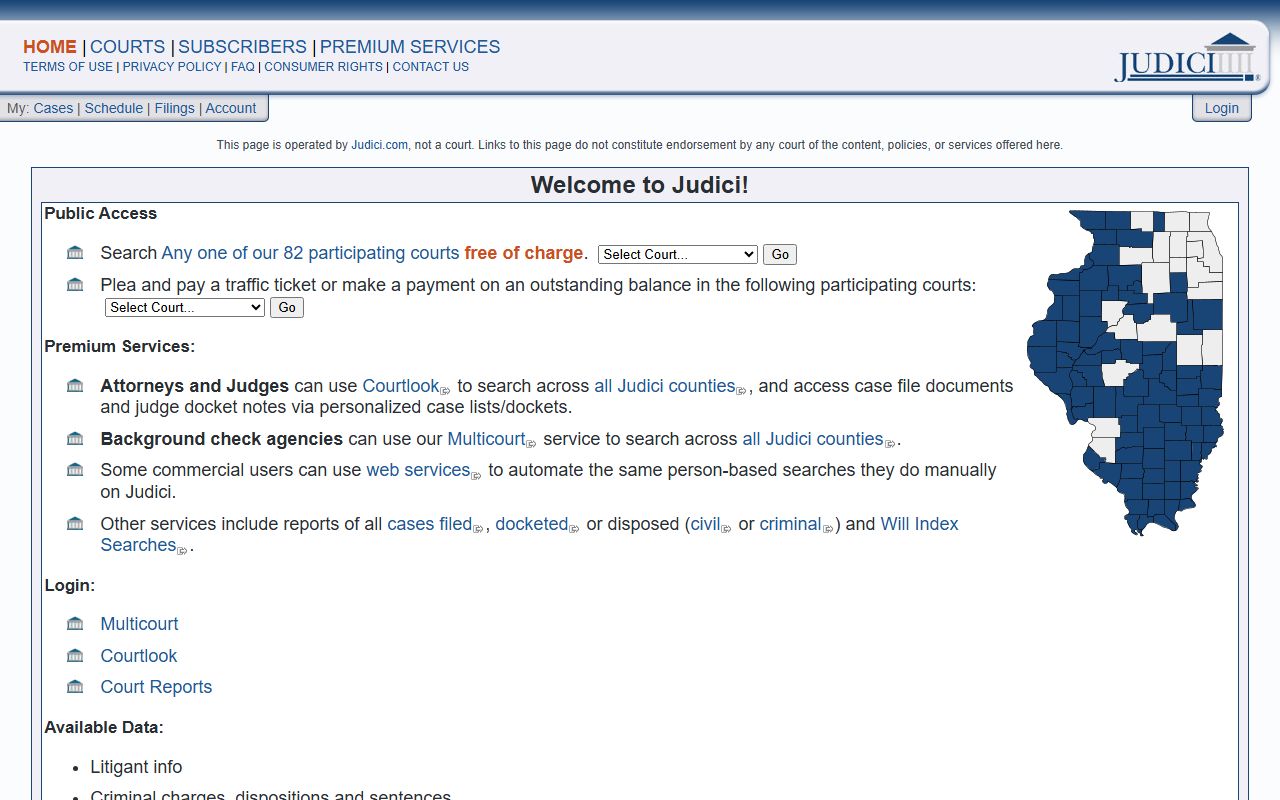
Judici offers free public access to Hancock County circuit court records, including dissolution of marriage cases, searchable by name or case number.
Fees for Dissolution of Marriage in Hancock County
Filing a dissolution of marriage petition in Hancock County requires a filing fee paid to the Circuit Clerk at submission. Illinois circuit court fees vary by county. The typical base fee for a dissolution petition ranges from $200 to $250 across Illinois. Call the Hancock County clerk at 217/357-2616 to confirm the exact current fee before you file. Copy fees for records requests depend on the number of pages, with certified copies costing more than plain photocopies.
If paying the fee is a hardship, you can file an Application to Sue or Defend as an Indigent Person along with your petition. A judge reviews your financial situation and can waive all or part of the filing costs. This option is available in all Illinois circuit courts. Approval does not slow down your case or affect how the court handles your dissolution petition in Hancock County.
Note: Fee structures are governed in part by the Clerks of Courts Act at 705 ILCS 105/.
Dissolution of Marriage Law and Process in Hancock County
Illinois law governs all dissolution of marriage proceedings in Hancock County. The main statute is 750 ILCS 5/, the Illinois Marriage and Dissolution of Marriage Act. Under 750 ILCS 5/401, at least one spouse must have lived in Illinois for 90 days before the petition is filed. You file with the Circuit Clerk in Carthage. The other party must be served with legal notice after filing, and they have time to respond before the case moves forward.
Illinois is a no-fault state. The sole ground for dissolution is irreconcilable differences. You do not have to show that the other party was at fault. Some cases qualify for a Joint Simplified Dissolution under 750 ILCS 5/452 if the marriage was short, there are no minor children, marital property is limited, and both parties waive maintenance. For most cases, property division follows 750 ILCS 5/503, and if children are involved, child support is calculated under 750 ILCS 5/505.
Hancock County's rural character means that both parties often need to plan travel to Carthage for hearings. The court may issue temporary orders for support or custody while the case is open. All orders and filings become part of the public record held by the Hancock County Circuit Clerk. Once the judge signs the final decree, the dissolution is complete.
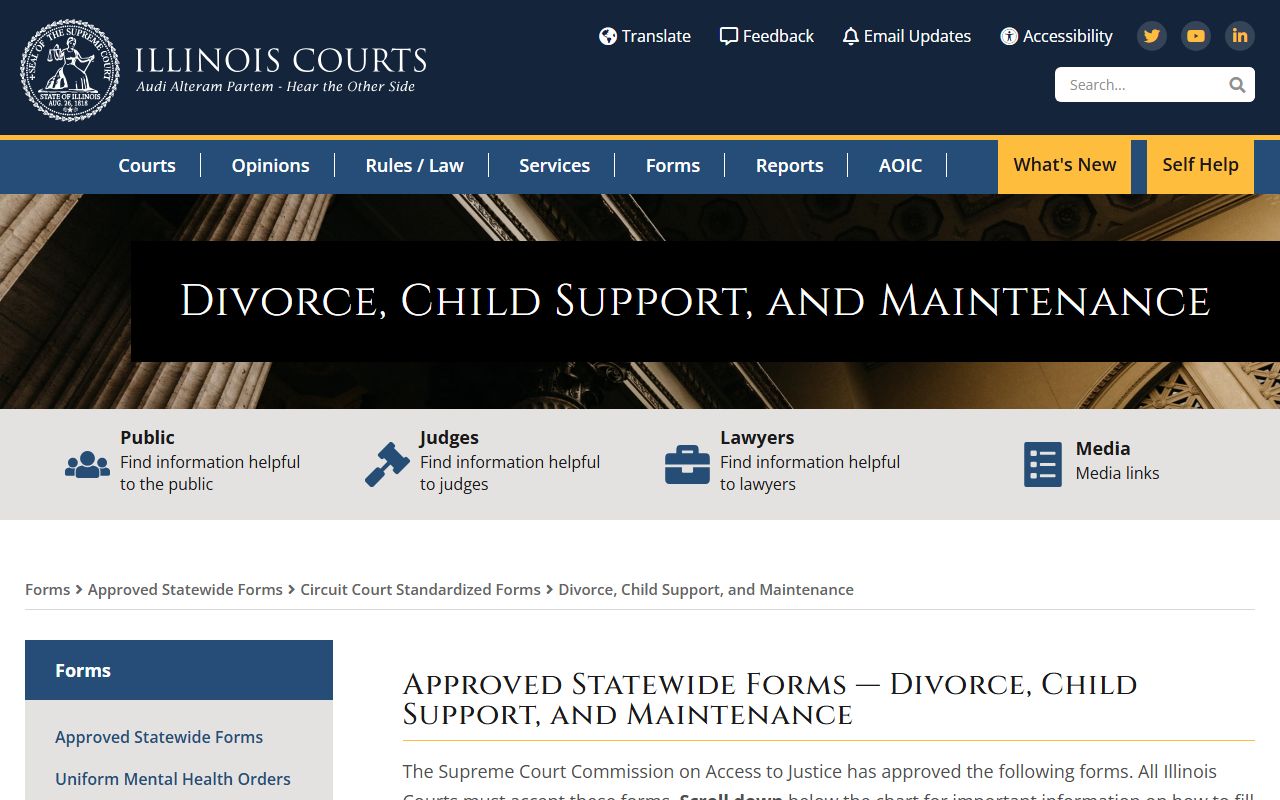
The Illinois Courts website has standardized forms for dissolution of marriage, including petitions and parenting plans, that Hancock County residents can download and use.
What Hancock County Dissolution of Marriage Records Contain
A dissolution of marriage file in Hancock County includes the petition, any response from the other party, temporary court orders issued during the case, the marital settlement agreement, and the final decree. The petition states who the parties are, when they were married, and what the petitioner is requesting. The settlement agreement is often the most detailed part of the file, covering property, debts, maintenance, and, if the couple has children, the parenting plan and support terms.
Illinois Supreme Court Rule 138 requires that documents filed in court have certain personal information redacted. Social Security numbers, financial account numbers, and similar identifiers are removed before the file is part of the public record. Most of the dissolution case file in Hancock County is publicly accessible under 5 ILCS 140/, the Illinois Freedom of Information Act. Some records related to minor children may have limited access. The final decree is the document most often needed for legal matters like name changes or real estate transfers. Certified copies are available from the clerk.
- Petition for dissolution of marriage
- Summons and proof of legal service
- Temporary orders for support, custody, or property
- Marital settlement agreement
- Parenting plan (when children are involved)
- Final decree of dissolution
IDPH Record Verification for Hancock County Dissolutions
The Illinois Department of Public Health keeps a statewide index of dissolution of marriage records from 1962 to the present. For events in Hancock County, you can request a written verification from IDPH for $5 per search. Mail your request to 925 E. Ridgely Ave, Springfield, IL 62702-2737, with the names of both parties and the approximate year. The response comes by mail in 4 to 6 weeks. IDPH does not issue certified copies of decrees, so contact the Hancock County clerk for those. Call IDPH at (217) 782-6554 with questions.
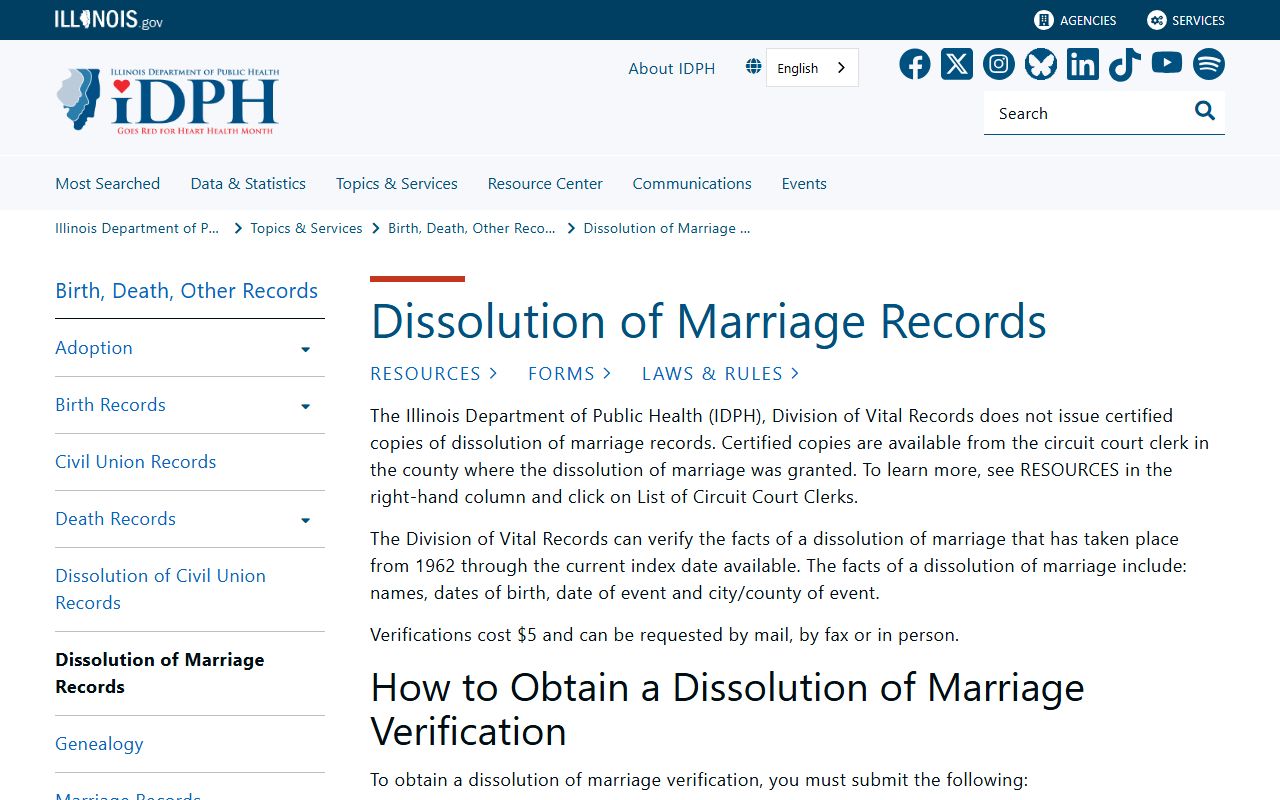
IDPH maintains a statewide dissolution of marriage index from 1962 forward and can provide written verification for cases filed in Hancock County.
Legal Help for Hancock County Dissolution Cases
Illinois Legal Aid Online provides free legal information and tools for people handling dissolution of marriage without an attorney. Hancock County residents can access guides, legal articles, and the Easy Form builder at www.illinoislegalaid.org. The site covers the full dissolution process from start to finish and explains what to expect at each step. The Easy Form tool lets you draft a petition and other required documents by answering plain-language questions.
If you need help getting copies of your dissolution records from the Hancock County clerk, Illinois Legal Aid has a guide for that too at www.illinoislegalaid.org. Official standardized forms for dissolution cases are available from the Illinois Courts website at www.illinoiscourts.gov. These forms are accepted in Hancock County and across all Illinois circuit courts.
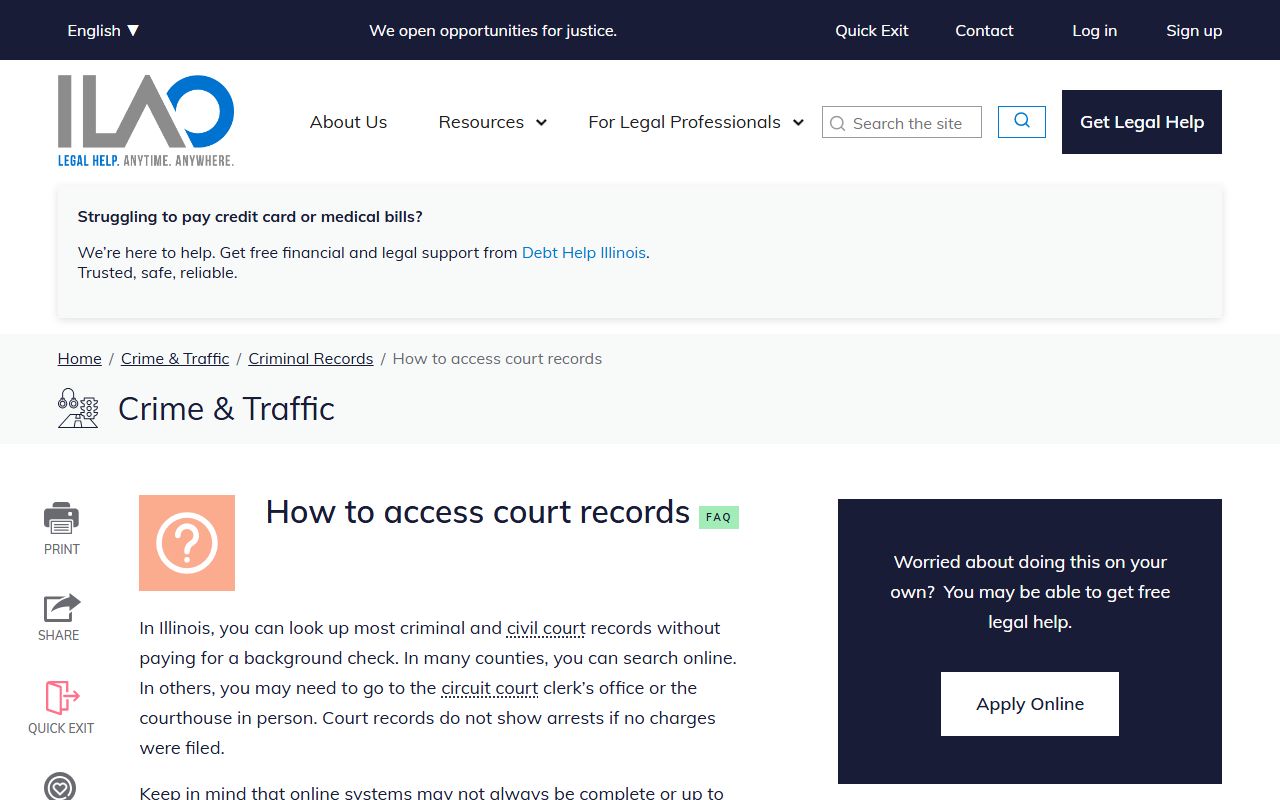
Illinois Legal Aid Online helps Hancock County residents understand how to request dissolution of marriage records and what documents are available from the circuit clerk.
Cities in Hancock County
No city in Hancock County meets the 50,000 population threshold for a dedicated city page. Carthage is the county seat and serves as the main hub for court filings. Nauvoo and Macomb-area communities in Hancock County all file dissolution of marriage cases at the Circuit Clerk office in Carthage.
Nearby Counties
These counties border Hancock County. File your dissolution of marriage petition in the county where you live to ensure the court has proper jurisdiction over your case.